Questions? Call Us: (408) 842-6667
2339 Technology Parkway Unit F, Hollister CA 95023


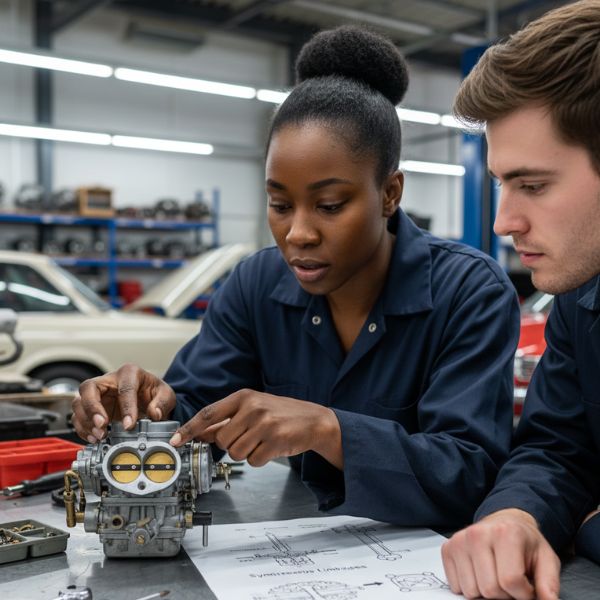
Welcome to this complete guide from Pierce Manifolds, where we'll explore the basics of the Econ Carburetor. If you've ever dealt with classic cars or performance tuning, you've likely encountered the renowned Weber carburetor. The "Econ" designation refers to a specific line of Weber carburetors engineered with a primary focus on maximizing fuel economy and providing efficient, streetable performance. While they maintain the legendary reliability and adjustability of the standard Weber line, the Econ models feature unique design elements calibrated to deliver excellent gas mileage without sacrificing too much drivability. Understanding these differences is key, whether you’re looking to purchase a new unit, source specific carburetor parts, or perform a comprehensive carburetor rebuild. Learn more below, and shop today.
Most Econ models, such as the popular Weber 32/36 DGEV, use a progressive throttle linkage. This is one of the most significant differences when comparing it to a synchronous type.
Progressive: The primary, smaller throttle plate opens first, handling low-speed, cruise, and idle operations. The secondary, larger throttle plate remains closed until the throttle is opened further (typically 2/3 to 3/4). This design ensures the engine operates on a smaller, highly efficient barrel most of the time, directly boosting fuel economy.
Synchronous: Both throttle plates open simultaneously. This is often preferred for high-performance applications where maximum airflow is needed immediately, but it is less fuel-efficient.
To further enhance fuel efficiency, the carburetor components of the primary circuit often include a smaller diameter venturi compared to a performance-oriented equivalent.
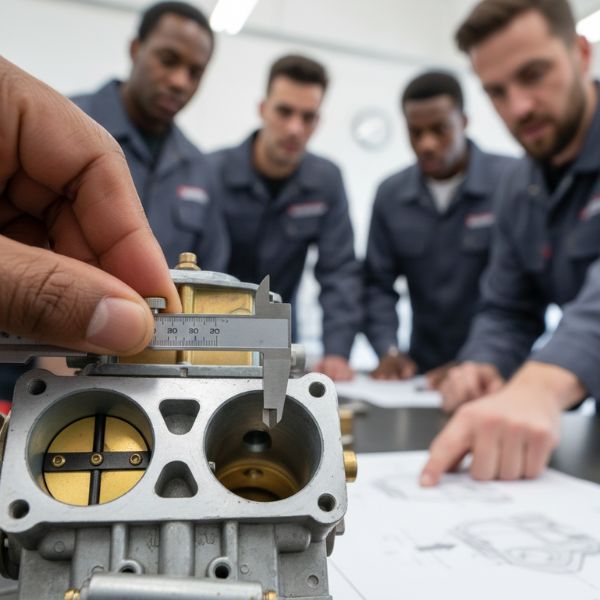
The venturi's purpose is to create a pressure drop, drawing fuel from the main jet. A smaller venturi creates a higher vacuum at lower airflow rates.
This higher velocity air/fuel mixture improves atomization and cylinder filling at low engine speeds, which is typical for city and highway cruising, contributing greatly to the Econ model's fuel-saving nature.
From the factory, the Econ carburetor is typically calibrated with leaner jetting (smaller main jets and air correctors) in the primary circuit than its performance counterparts.
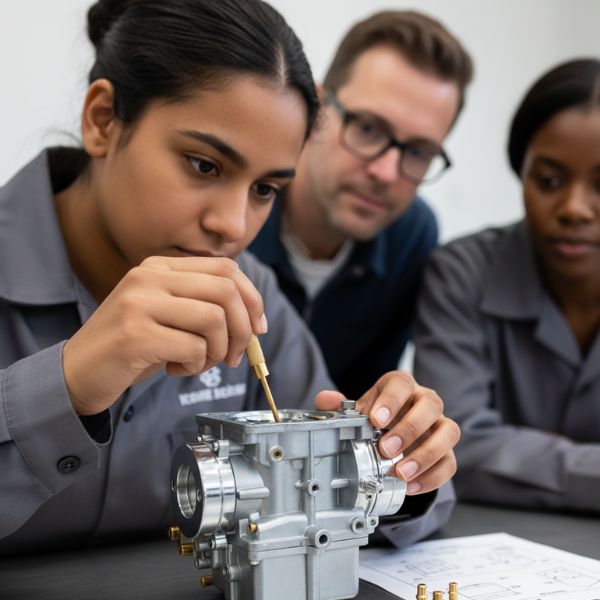
Jetting refers to the brass metering orifices that control the amount of fuel and air entering the venturi.
The manufacturer's baseline tuning reflects a strong emphasis on achieving the best possible fuel economy while still maintaining acceptable emissions and smooth operation. When you undertake a carburetor rebuild, you can fine-tune this for your specific engine.
The idle circuit in a Weber carburetor is crucial for smooth running at zero throttle. In the Econ line, this circuit is often finely tuned for minimal fuel consumption.
The idle jet, idle air bleed, and transition ports are all calibrated to run a very lean but stable air/fuel ratio.
Proper adjustment of the idle mixture screw is essential for a smooth idle and is often the first step in basic tuning.
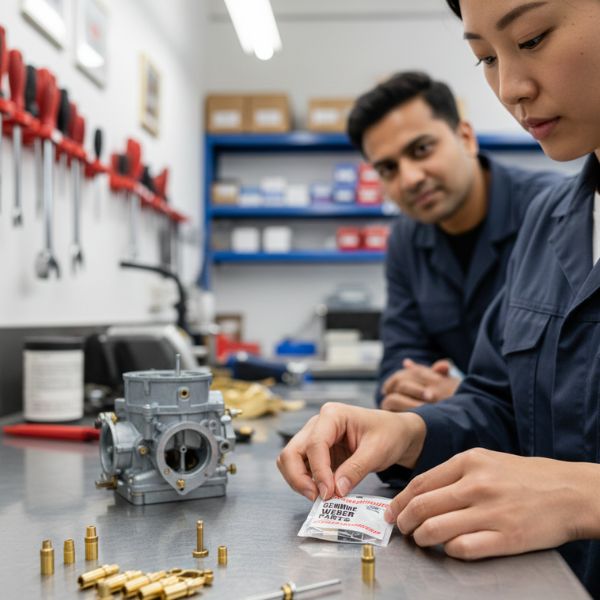
Whether you need a full carburetor rebuild or just simple maintenance, using high-quality weber carburetor parts is critical for maintaining the intended economy and performance characteristics.
Sub-par gaskets, needles, or jets can compromise the carburetor's sealing, metering precision, and overall efficiency.
When ordering carburetor rebuild kits, ensure they are specific to your Weber model (e.g., 32/36 DGEV) to guarantee the included jets, valves, and gaskets match the original factory specifications for the best Econ performance.
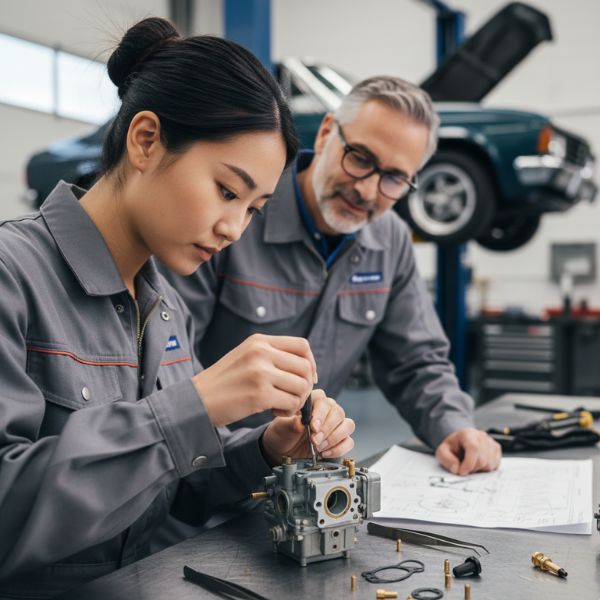
A comprehensive carburetor rebuild is necessary if the unit is leaking, running rough, or showing signs of internal wear. The process involves complete disassembly, cleaning of all carburetor components, and replacement of all wear items.
Carburetor rebuild kits typically include gaskets, O-rings, a new needle and seat assembly, and sometimes accelerator pump diaphragms.
After the rebuild, meticulous reassembly and careful tuning (float level, idle speed, idle mixture) are required to restore the Econ carburetor to its peak efficiency and performance.
The Econ carburetor is a thoughtfully engineered solution that brings the reliability and simple tuning of the Weber carburetor to those who prioritize fuel efficiency. Its progressive linkage, smaller primary venturi, and specific factory jetting all work in concert to deliver excellent mileage for daily driving. By understanding these core features, using genuine Weber carburetor parts, and performing timely maintenance or a full carburetor rebuild, you can ensure your engine runs as cleanly and economically as the manufacturer intended. Shop Pierce Manifolds today.