Questions? Call Us: (408) 842-6667
2339 Technology Parkway Unit F, Hollister CA 95023

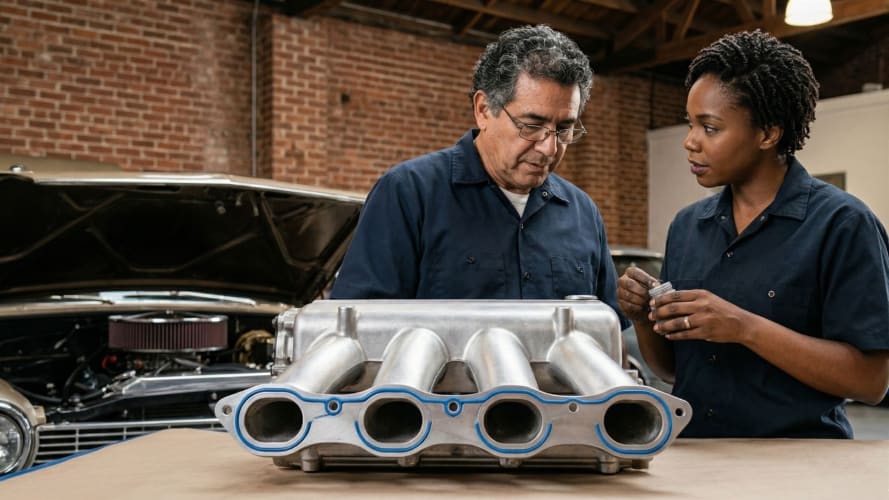
When you are restoring a vintage engine, the "devil is in the details" isn't just a cliché—it’s a mechanical reality. You’ve likely spent hours sourcing the perfect components, but even the best Weber intake manifolds can fall victim to the passage of time. If your surfaces aren't perfectly flat, you’re looking at vacuum leaks that will haunt your idle and ruin your air-fuel ratios. At Pierce Manifolds, we know that a perfect seal is the foundation of performance. Shop today.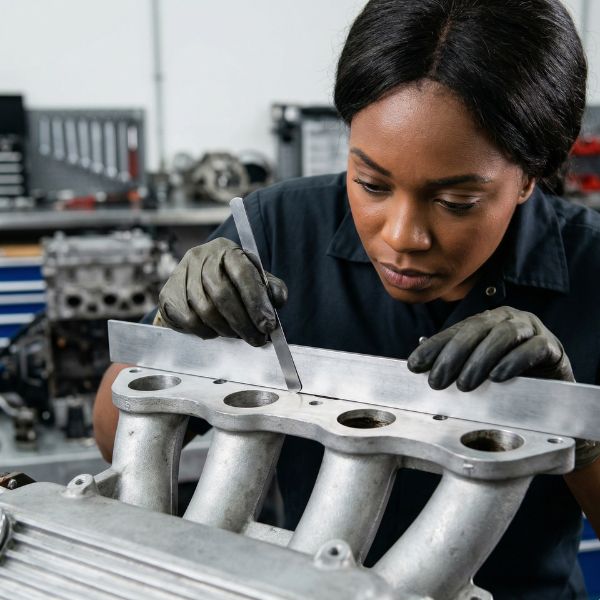
Before you bolt anything down, you need to check the mounting flange. Over decades of heat cycles, intake manifolds can slightly bow or warp. You can check this by using a high-quality straightedge and a feeler gauge across the mating surface. If you can slip a gauge through any gap, your seal is compromised. Ensuring that your Weber manifolds are perfectly true is the first step toward a crisp, responsive throttle.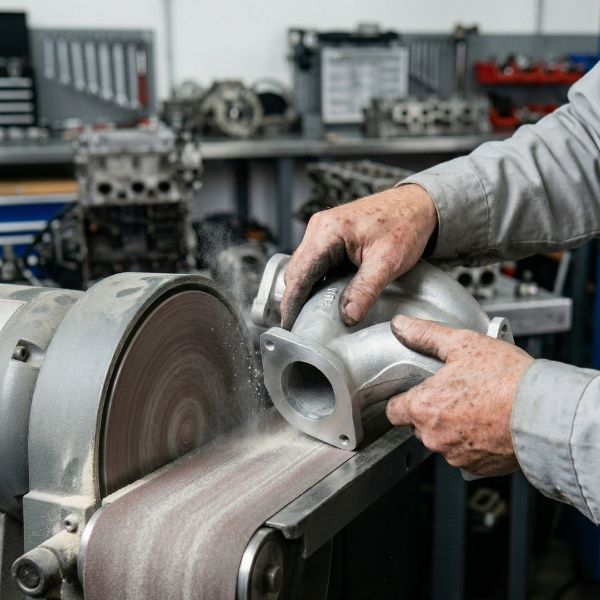
Resurfacing isn't about removing chunks of metal; it’s about precision. Using a stationary belt sander or a milling machine, the goal is to create a fresh, flat plane. You want a surface finish that is smooth enough to seal but has just enough "bite" for the gasket to seat properly. When you prep your intake manifolds this way, you eliminate the need for excessive RTV or "make-do" sealants that can eventually break off and enter your intake tract.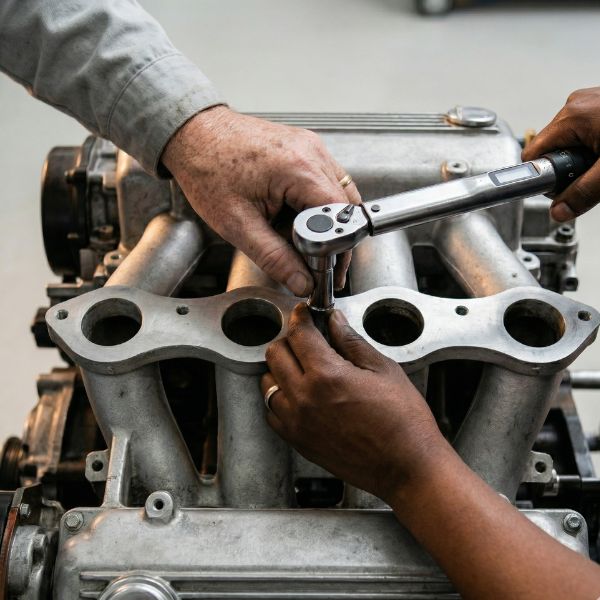
Once the surfaces are flat, the final hurdle is how you join them. You should always tighten the bolts in a staggered pattern, starting from the center and working your way out. This even distribution of pressure prevents the manifold from "walking" or bowing as it compresses the gasket.
A classic engine is only as good as its weakest seal. By taking the time to resurface your Weber intake manifolds, you ensure that every ounce of fuel and air is going exactly where it belongs. Shop today.